AI wants Bitcoin miners’ power, but the contracts reveal who really gets paid

Bitcoin miners spent years securing cheap electricity, building substations, and negotiating the grid connections needed to power their operations. Now AI companies want those connections so badly they're willing to make aging mines valuable real estate. The ASICs that mine Bitcoin are practically useless for training AI models, but the land, substations, and power agreements… Read the full story on CryptoSlate Understand the crypto stories that matter and what to watch next. Get The Catalyst in your inbox
Key Takeaways
- Bitcoin miners spent years securing cheap electricity, building substations, and negotiating the grid connections needed to power their operations.
- Now AI companies want those connections so badly they're willing to make aging mines valuable real estate.
- The ASICs that mine Bitcoin are practically useless for training AI models, but the land, substations, and power agreements… Read the full story on CryptoSlate Understand the crypto stories that matter and what to watch next.
Summary generated by IndiCrypto from CryptoSlate. IndiCrypto is a news aggregator and does not provide investment advice. Read the original article for full context.
More in Regulation
Record Breaking Binance Hack Hits Markets, Kalshi Hits New Valuation, And More – Weekly Recap
This week’s stories spanned exchange security, prediction markets, bitcoin treasury risk, earnings and tokenization. Binance investigated a potential multibillion-dollar hack, while Kalshi raised another $1 billion at a $40 billion valuation. Datavault AI…
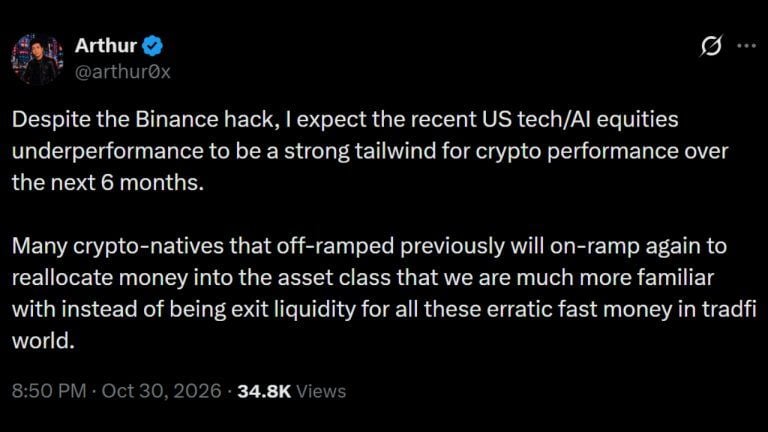
AI/Tech Selloff Drives Massive Crypto Tailwind, Experts Say
Despite the recent hack that affected Binance, causing over $6 billion in losses to the company, industry leaders still believe that the cryptocurrency market might benefit from a downturn in the U.S. tech/AI equity sector, with investors pivoting liquidity…

FBI blames North Korea for record $6.3B Binance hack
US agency seeks private-sector help to block further money-laundering of stolen digital assets.