How to Launch a Fintech Product Without Building Infrastructure From Scratch

Picture a payments product built around one promise: a small business pays an overseas contractor without juggling several banking portals. The transfer screen is the easy part. Behind it sit customer verification, a ledger, payment connections and a way to trace a transfer that fails. Each is a separate engineering project, and none is the reason customers choose the product. Using existing infrastructure for the standard parts is the shortest route to launch, provided the team knows which parts are standard. What Must Work Before a Fintech Product Goes Live Before it accepts a first customer, a contractor-payment service needs identity and business verification (KYC and KYB checks), a reliable record of balances and transactions, connections to payment networks, transaction monitoring, and back-office tools for investigating problems. The accounting component is called a ledger. It records movements and obligations inside the product; it does not send money through a banking network. That takes financial partners and technical integrations. A transfer that has been submitted has not necessarily settled, so the application has to track and display statuses accurately. Cards and crypto add their own layers. Cards add an issuing partner and a card processor. Crypto payments need wallet technology, transaction screening, and connections to custody or liquidity services. The exact combination depends on the business model and the markets it serves. What Is Worth Building In-House? Customers of a contractor-payment service typically care about clear fees, reliable payment tracking, and the ability to manage recipients in several countries. Those are where the product wins or loses. A homemade document-verification system is not: customers will never compare you on it. So the company can integrate identity checks, use a ready-made ledger and connect to an existing payment provider, while it designs the customer journey, sets prices and runs the product.
Key Takeaways
- Picture a payments product built around one promise: a small business pays an overseas contractor without juggling several banking portals.
- The transfer screen is the easy part.
- Behind it sit customer verification, a ledger, payment connections and a way to trace a transfer that fails.
Summary generated by IndiCrypto from NewsBTC. IndiCrypto is a news aggregator and does not provide investment advice. Read the original article for full context.
More in Regulation
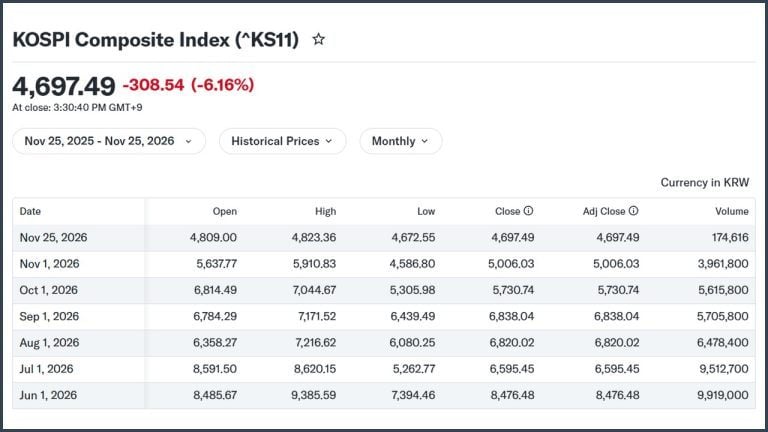
Bitcoin Slips Under $60,000 Again as KOSPI Plunges 6% and Softbank Sinks 14%
South Korea’s KOSPI fell nearly 6% Wednesday morning, and Softbank lost 14% as an AI sell-off swept Asian markets, dragging bitcoin back below $60,000 once again. Seoul Leads the Sell-off The KOSPI fell to near 4,700 on Wednesday, down from 5,006.03 a day…

Is Wall Street Reliving the 2018 Sell-Off? Tom Lee and Citadel Disagree
Fundstrat’s Tom Lee sees less downside for US stocks into year-end, rejecting fears of a 2018 sell-off repeat. His case rests on the AI boom, which 2018 never had. Citadel Securities strategists read the same backdrop the other way and warn that late-2018…

South Korea’s crypto bill could move stablecoin race beyond token issuance
South Korea’s draft bill favors bank-led stablecoin issuance but allows fintech and technology companies to become the largest individual shareholders.